
 Clear
Clear
Search Result

Kansai Nerolac
The Story Till Date
Energy
GRI Standards
| GRI 302: Energy | Sections/Comments | |
|---|---|---|
| GRI 103-1 | Management approach: Explanation of the material topic and its boundary | |
| GRI 103-2 | Management approach: The management approach and its components | |
| GRI 103-3 | Management approach: Evaluation of the management approach | |
| GRI 302-1 | Energy consumption within the organization | Energy Consumption Table |
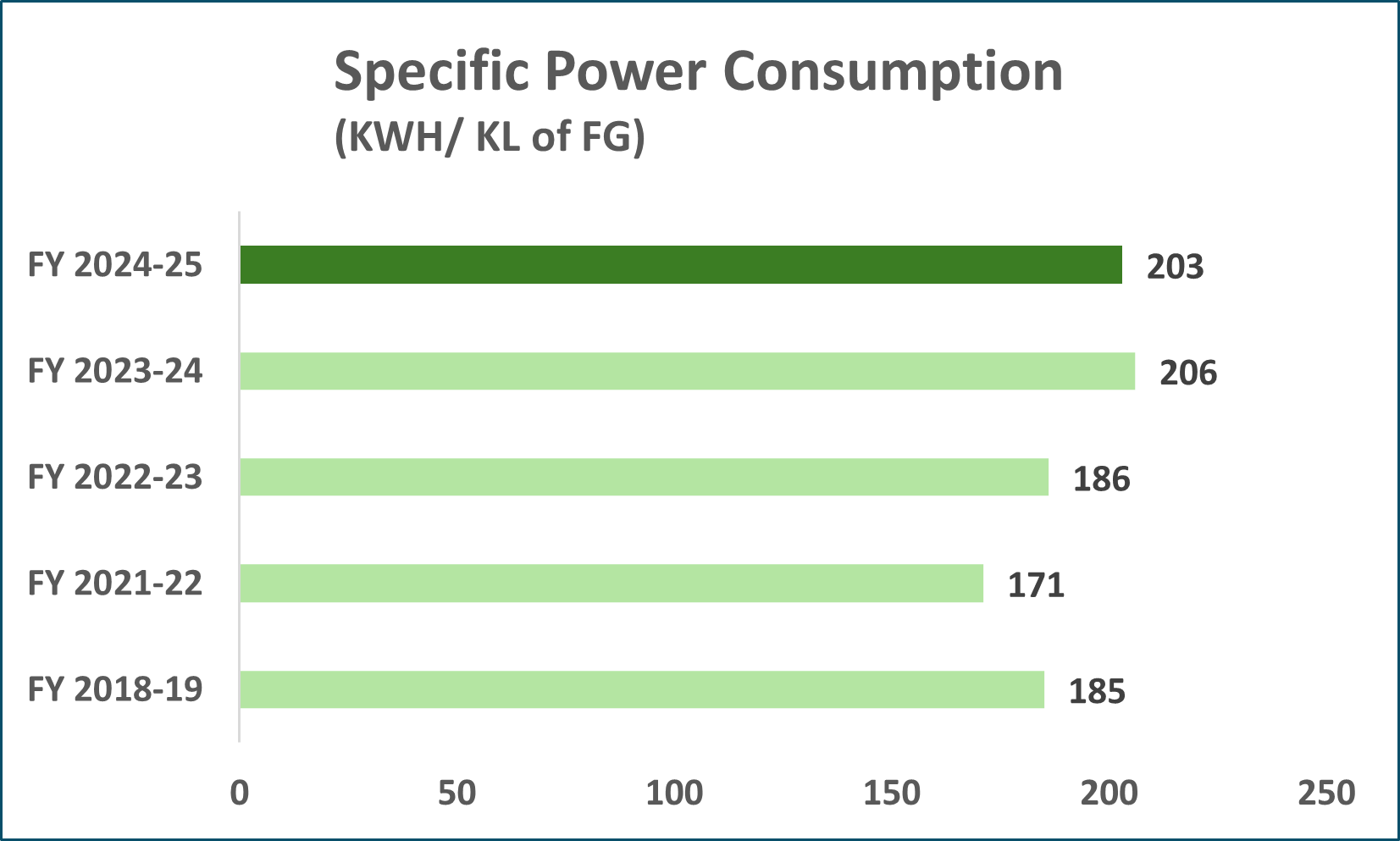
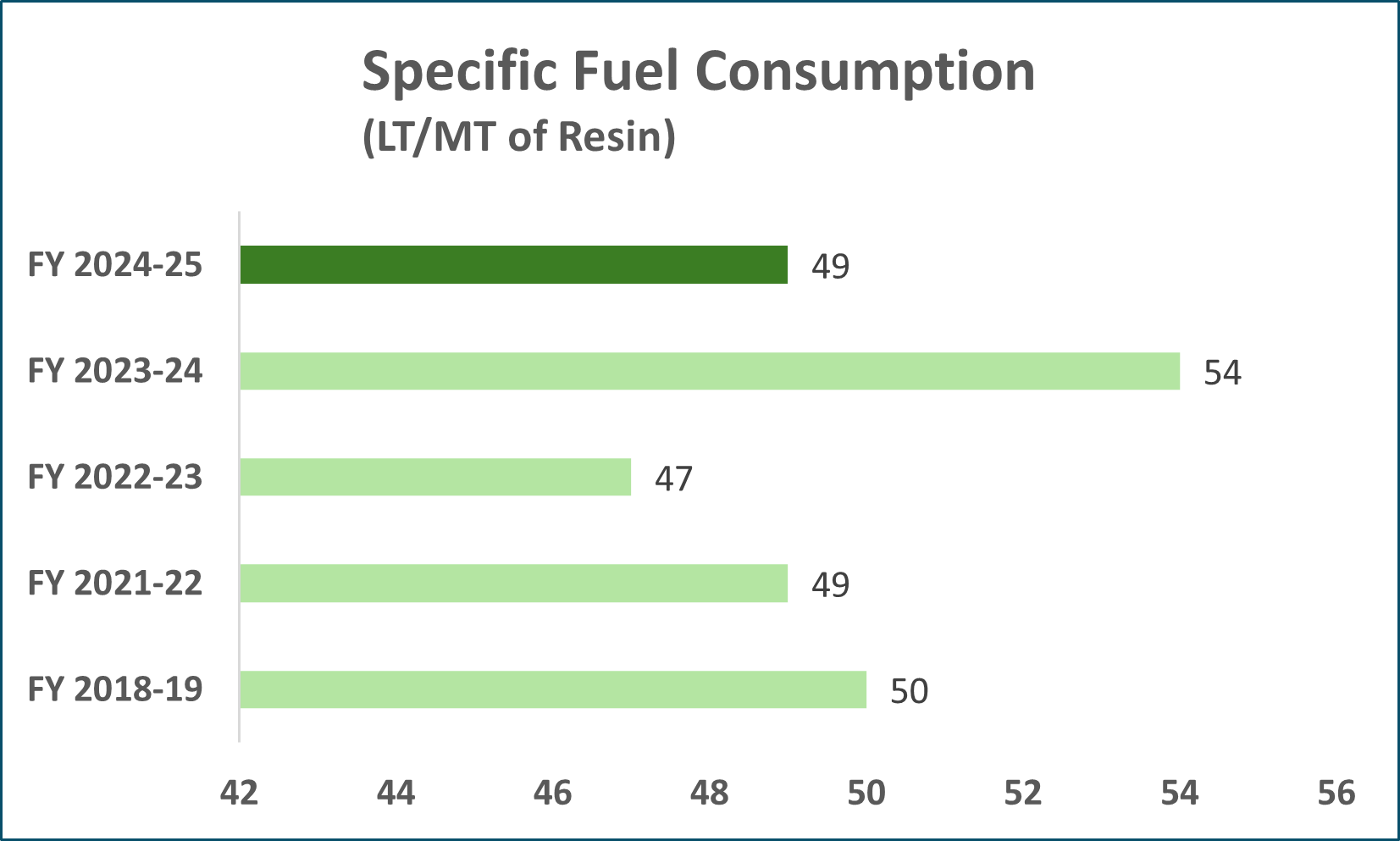
| GRI 302-3 | Energy intensity | Energy Intensity: 1.43 GJ/KL of FG Sp. Power Consumption: Manufacturing Facilities 206 KWH/KL of FG Sp. Fuel Consumption: Manufacturing Facilities 54 LT/MT of Resin |
| GRI 302-4 | Reduction of energy consumption | Sp. Power Consumption: Manufacturing Facilities 203 KWH/KL of FG Sp. Fuel consumption: Manufacturing Facilities 49 Lt/MT of Resin production |
| GRI 302-5 | Reductions in energy requirements of products and services | KNPL actively explores and adopts environmentally friendly options like renewable energy sources like solar and wind power. By integrating renewable energy into its operations, KNPL decreases its reliance on fossil fuels and contributes to the overall decarbonisation of the energy sector. |
Planning for the Future
We are committed to steadily advancing towards achieving our RE 70 targets on a Company-wide scale.
- We plan to have all our plants, Energy Management Systems certified through ISO 50001, an international standard which certifies our commitment towards energy performance and sustainability. Currently 3 of our manufacturing facilities are certified with ISO 50001 Certification.
- We aim to gradually adopt new concepts and technologies which further lead to energy conservation and increased energy efficiency
- We have windmill installations across the states of Maharashtra and Tamil Nadu.
- We have recently commissioned 2100 KW capacity Wind turbine at our Sayakha Plant. With this, our Captive windmill capacity have increased to 8400 KW.
- Commissioning work is in progress for 3000 KW offsite Captive Solar farm in the district of Yavatmal in Maharashtra which shall cater to power requirements at our Lote Plant.
ENERGY CONSUMPTION
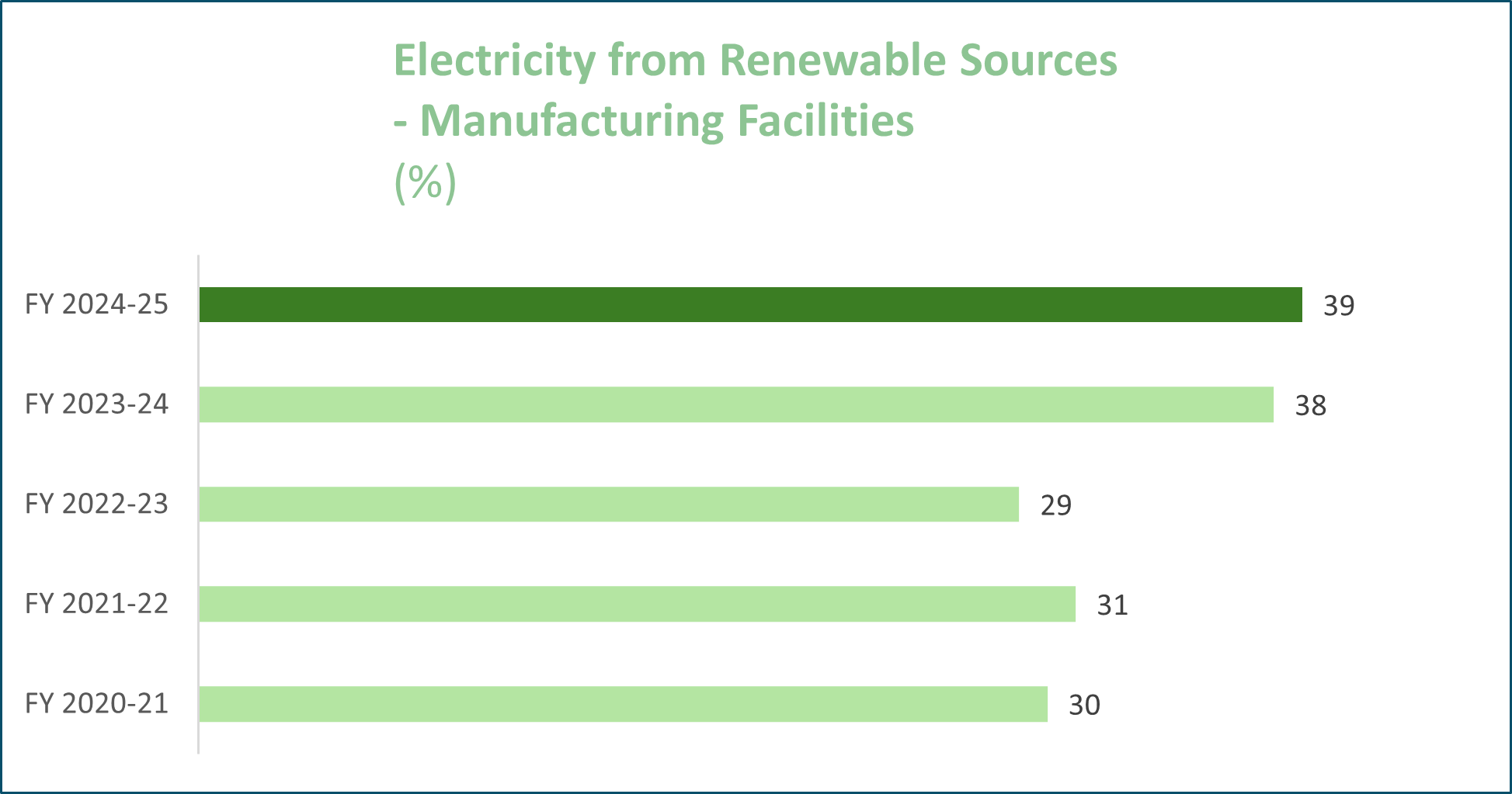
At KNPL, progress in energy management is measured through key indicators of specific power consumption, specific fuel consumption and percentage of renewable energy.
| Parameter | FY 24-25 |
|---|---|
| From renewable sources | |
| Total Electricity Consumption (A) | 1,23,845 GJ |
| Total Fuel Consumption (B) | 428 GJ |
| Energy Consumption Through other sources (C) | 1,24,839 GJ |
| Total Energy Consumption through Renewable Sources (A+B+C) | 2,49,112 GJ |
| From non-renewable sources | |
| Total Electricity Consumption (D) | 1,47,499 GJ |
| Total Fuel Consumption (E) | 1,38,834 GJ |
| Energy Consumption Through other sources (F) | 0 GJ |
| Total Energy Consumption through Non-Renewable Sources (D+E+F) | 2,86,333 GJ |
| Total Energy Consumption (A+B+C+D+E+F) | 5,35,445 GJ |
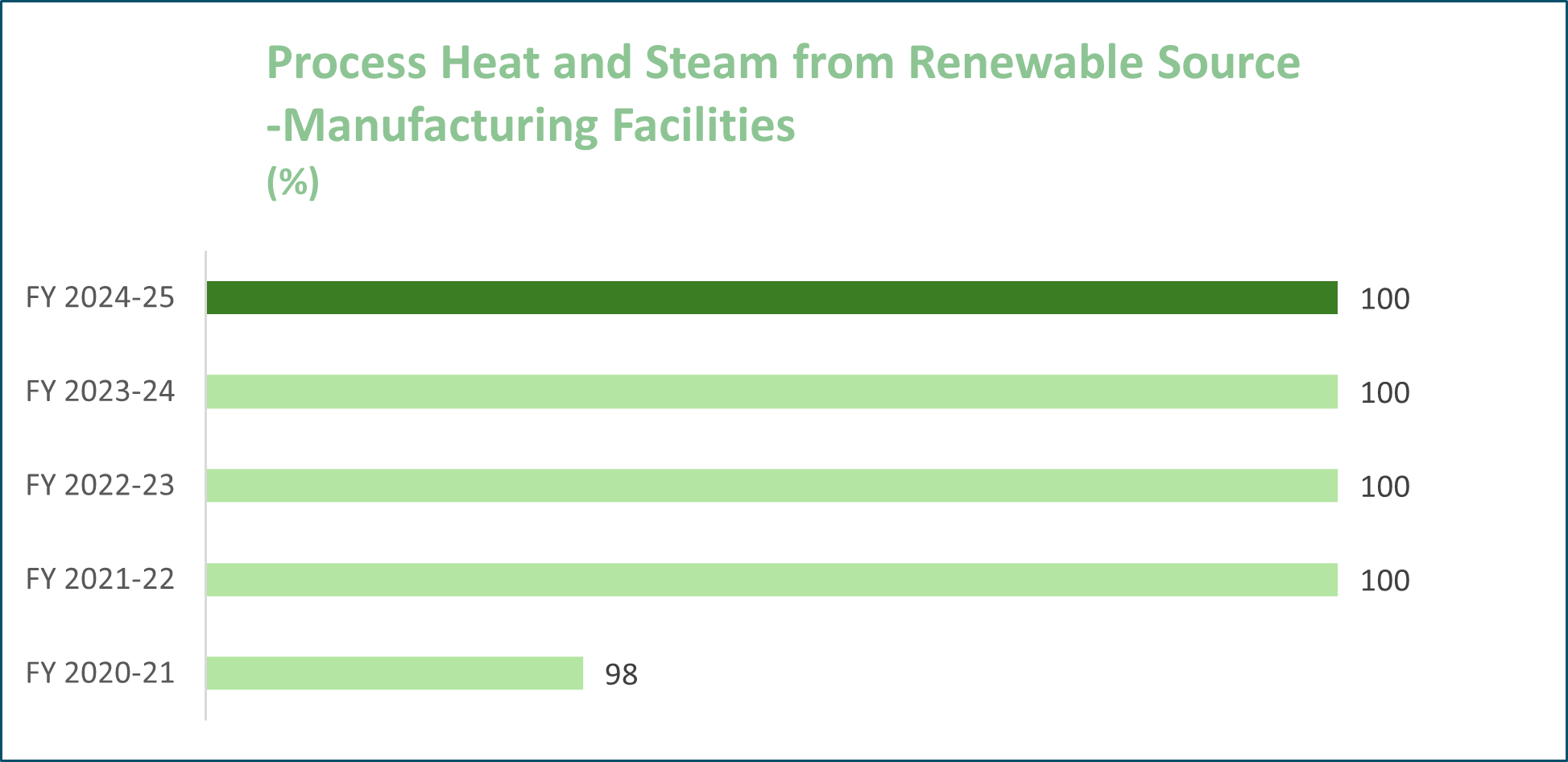
Energy is also used in the form of steam and heat in our manufacturing processes. Most of the steam and heat requirements are being met through biofuel and biomass based solid fuel boiler.
Specific Power Consumption
|
Method of Calculation:
Specific Power Consumption is ratio of Electricity Consumed (from all sources) at Plants to Total Production of Finished
Goods during Specified Period. Electricity consumption is sum of electricity received from grid (i.e. state electricity board), electricity generated
from DG set and electricity from renewable energy sources at respective manufacturing facilities.
Specific Fuel Consumption
|
METHOD OF CALCULATION- Specific Fuel Consumption is ratio of Fuel Consumption in Boilers at Plants to Total Resin Production during a Specified Period.
Energy Intensity
In FY 2025-26, we consumed 5,35,445 GJ of energy within the Company, with an overall energy intensity of 1.40 GJ/KL of finished goods (FG).
Method of Calculation:
Energy Intensity is ratio of Total energy (Fuel + Power + Heat and Steam) consumed within factory premises organisation-wide (Manufacturing facilities, R&D centre and Head Office) to Total Production of Finished Goods during specified period.
Reduction of energy consumption
At KNPL, we measure our energy management progress using key performance indicators (KPIs), such as specific power consumption, specific fuel consumption, capacity addition of green power, percentage of green power utilisation, power factor controls, fuel mapping and adoption of greener alternatives.
- 47% of Energy consumption is through renewable sources
- Utilised 46% of electricity from Renewable Sources
Diversification of Energy-mix
Projects commissioned in FY 25-26
A Second Captive Wind Turbine of 2.1 MW in Gujarat
A Captive Offsite Solar Plant of 3 MW in Maharashtra
Renewable Energy:
We constantly search for alternate sources to increase our share of green energy and accordingly plan our initiatives based on feasibility and applicability. This, in turn, allows our facilities to be increasingly self-reliant in their energy needs and thereby reduce the carbon footprint.
In FY 25-25, total renewable energy consumed was 2,49,112 GJ, accounting for ~47% of our Company’s total energy consumption. We are committed to steadily advancing towards achieving our RE 70 targets on a Company-wide scale.
We are committed to steadily advancing towards achieving our RE 70 targets on a Company-wide scale.
|
|
Heat and Steam generation through Biomass based Boiler
| Heat and Steam generation through Biomass based Boiler | |
|---|---|
| Total Steam Consumption | 19,957 MT |
| Total Heat Consumption | 1,69,510 Lakhs Kcal |
Other Initiatives
• Implementation of Heat recovery system in compressor
• Implementation of fuel catalyst to improve efficiency
• Merging of chillers and compressed air systems
• Implementation of Pump Coatings for reduction of frictional losses on high-capacity Centrifugal Pumps
• Migration to Piped Natural Gas (PNG) at our plants and usage of Fuel catalyst in PNG
• Air Compressor Heat recovery system
• Installation of Air Handling Unit (AHU) blower fans with new energy efficient blowers
• Horizontal Deployment Energy Management System for real time energy tracking, better analysis and identify areas of improvement
ISO 50001 – Energy Management System
At KNPL, energy efficiency is a key environmental priority that drives our commitment to implementing diverse energy-saving initiatives. We continuously seek environmentally responsible and cost-effective solutions to reduce consumption and optimise performance. We remain committed to reducing our energy footprint.
Six of our major manufacturing facilities are certified under ISO 50001 Energy Management Systems, reflecting our focus on energy efficiency and sustainable operations. This certification supports a structured approach to managing energy performance, reducing environmental impact and driving continual improvement across our manufacturing footprint.
-

Get in Touch Get in Touch -
Store Locator Store Locator -

Download App Download App
Get in Touch
Looking for something else? Drop your query and we will contact you.


